
Responsibility in groups of companies as a tool for protecting minority participants
January, 2025 | Published
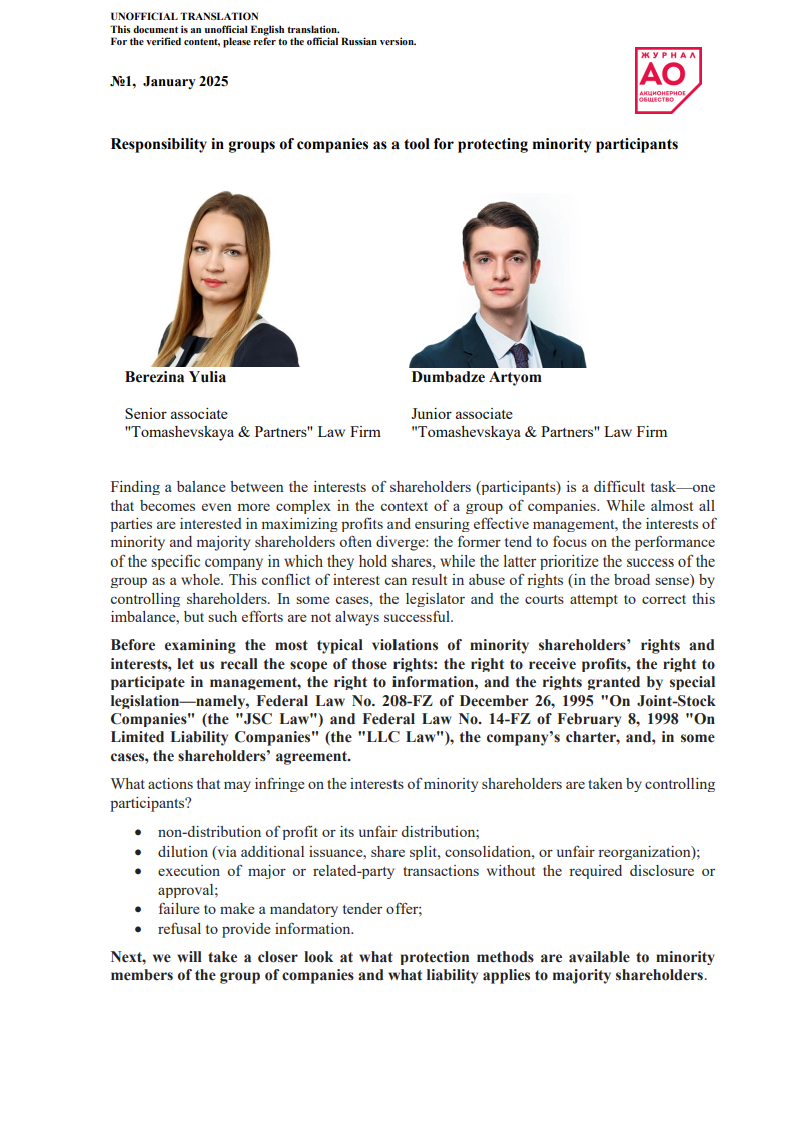
Authors: Berezina Yulia, Dumbadze Artyom
Finding a balance between the interests of shareholders (participants) is a difficult task—one that becomes even more complex in the context of a group of companies. While almost all parties are interested in maximizing profits and ensuring effective management, the interests of minority and majority shareholders often diverge: the former tend to focus on the performance of the specific company in which they hold shares, while the latter prioritize the success of the group as a whole. This conflict of interest can result in abuse of rights (in the broad sense) by controlling shareholders. In some cases, the legislator and the courts attempt to correct this imbalance, but such efforts are not always successful.